Świętokrzyskie Voivodeship — Europe's oldest hills, flint mines and loess ravines.
Poland's second-smallest region, built around one of the oldest mountain ranges in Europe. The Neolithic striped-flint mines at Krzemionki joined the UNESCO list in 2019, Łysica tops out at 614 metres, and Sandomierz and Ujazd hold the region's finest architecture.
What to know before you go
Świętokrzyskie covers roughly 11,700 km² and is, after Opole, the smallest Polish region — which works in its favour, since a single base puts almost everything within a day's reach. The capital, Kielce, sits in the middle. The region takes its name from the Holy Cross Mountains, a low range whose highest summit does not pass 614 metres but which counts among the oldest in Europe. Their core is Cambrian quartzite sandstone, raised first in the Caledonian and then in the Variscan orogeny, and flattened and flooded by sea many times since. To the south lies the Nida valley, a warm gypsum country; the Vistula forms the eastern boundary.
The best-known part is the Łysogóry ridge, with Łysica (614 m) and Łysa Góra (595 m). Świętokrzyski National Park, created on 1 May 1950 as Poland's third, protects a little over 76 km², about ninety-five per cent of it forest — mostly beech and fir. Its signature feature is the gołoborza: fields of sharp-edged quartzite blocks with no soil and no plants, formed during the Ice Age as water froze and thawed repeatedly in rock fissures. On top of Łysa Góra stands the former Benedictine abbey of Święty Krzyż, ringed by the remains of a pre-Christian stone rampart — a reminder that the hill mattered long before the monastery.
Older still is what lies underground. At Krzemionki, near Ostrowiec Świętokrzyski, a complex of prehistoric mines for striped flint has survived: roughly four thousand shafts across more than 78 hectares, worked from the middle of the fourth to the middle of the second millennium BC. The geologist Jan Samsonowicz found them in 1922. Axes made from this flint travelled several hundred kilometres, which makes the site evidence of long-distance exchange at a surprising scale. In 2019 the mining region entered the UNESCO World Heritage List, the first Polish archaeological site to do so. Visits follow an underground route between the pillars the Neolithic miners left standing.
The region's handsomest town is Sandomierz, spread over seven hills above the Vistula and declared a Monument of History in 2017. It keeps the Gothic Opatów Gate, a town hall with a Renaissance parapet, a cathedral painted in 1421, the Romanesque church of St James from the first half of the 13th century, and an underground route through old merchants' cellars. Loess ravines start just beyond the houses, along with the Pieprzowe Hills and their exposure of the oldest rocks in this part of Poland. The other heavyweight is Ujazd, where Krzysztof Ossoliński built Krzyżtopór between 1621 and 1644: a palazzo in fortezza set inside a pentagon of bastions, one of the largest palaces in Europe before Versailles was raised. It burned in 1770 and has stood as a roofless ruin ever since, with most of its walls intact.
Smaller places fill in the rest without dropping in quality. In Kielce, the Palace of the Kraków Bishops, built for Bishop Jakub Zadzik between 1637 and 1641, is the best-preserved early Baroque residence in the country, with ceiling paintings from Tomasz Dolabella's workshop and the National Museum inside. At Wąchock, the Cistercian abbey founded in 1179 has a chapter house widely called the finest Romanesque interior in Poland, and facades banded in alternating sandstone. Chęciny offers a royal castle ruin on a limestone ridge, with the dripstone-rich Raj Cave nearby. Two spa towns work the Nida valley: Busko-Zdrój, where sulphide baths have been given since the Marconi sanatorium opened in 1836, and smaller Solec-Zdrój. Outside the national park, nine landscape parks carry the region's conservation.
What to see in Świętokrzyskie Voivodeship and around
The closest sights we have described — each with its own guide. More places from this region are added every day.
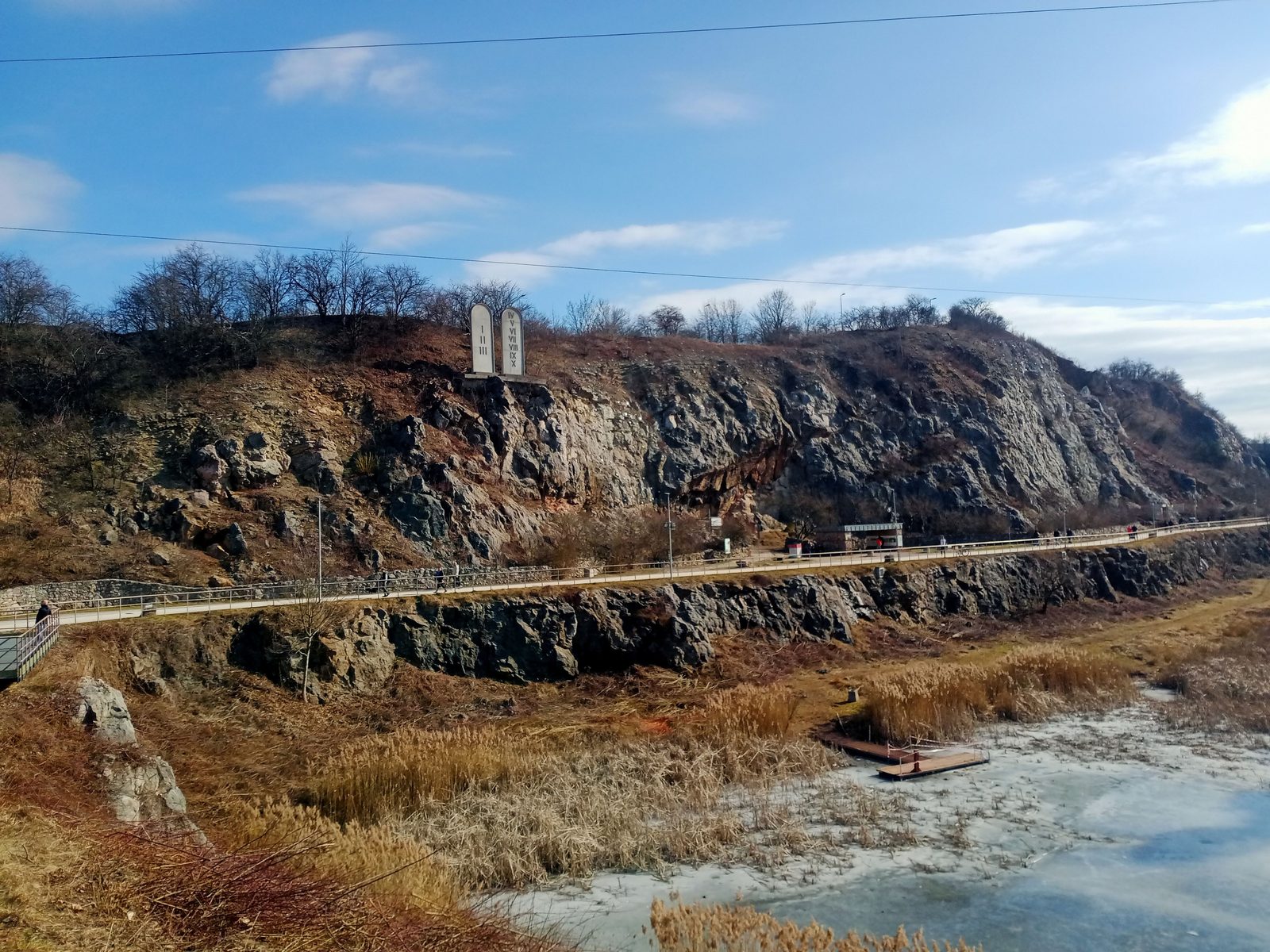
Kielce — Kadzielnia and the market square
The regional capital and the gateway to the Holy Cross Mountains — the Kadzielnia geological reserve with its amphitheatre, the historic market square and the bishops' palace.
Góry Świętokrzyskie · 16 km away Read the guide →The Ethnographic Park at Tokarnia
The open-air museum of the Kielce Village Museum at Tokarnia — historic cottages, manor houses, a church and windmills from the Holy Cross countryside on a broad site.
Góry Świętokrzyskie · 18 km away Read the guide →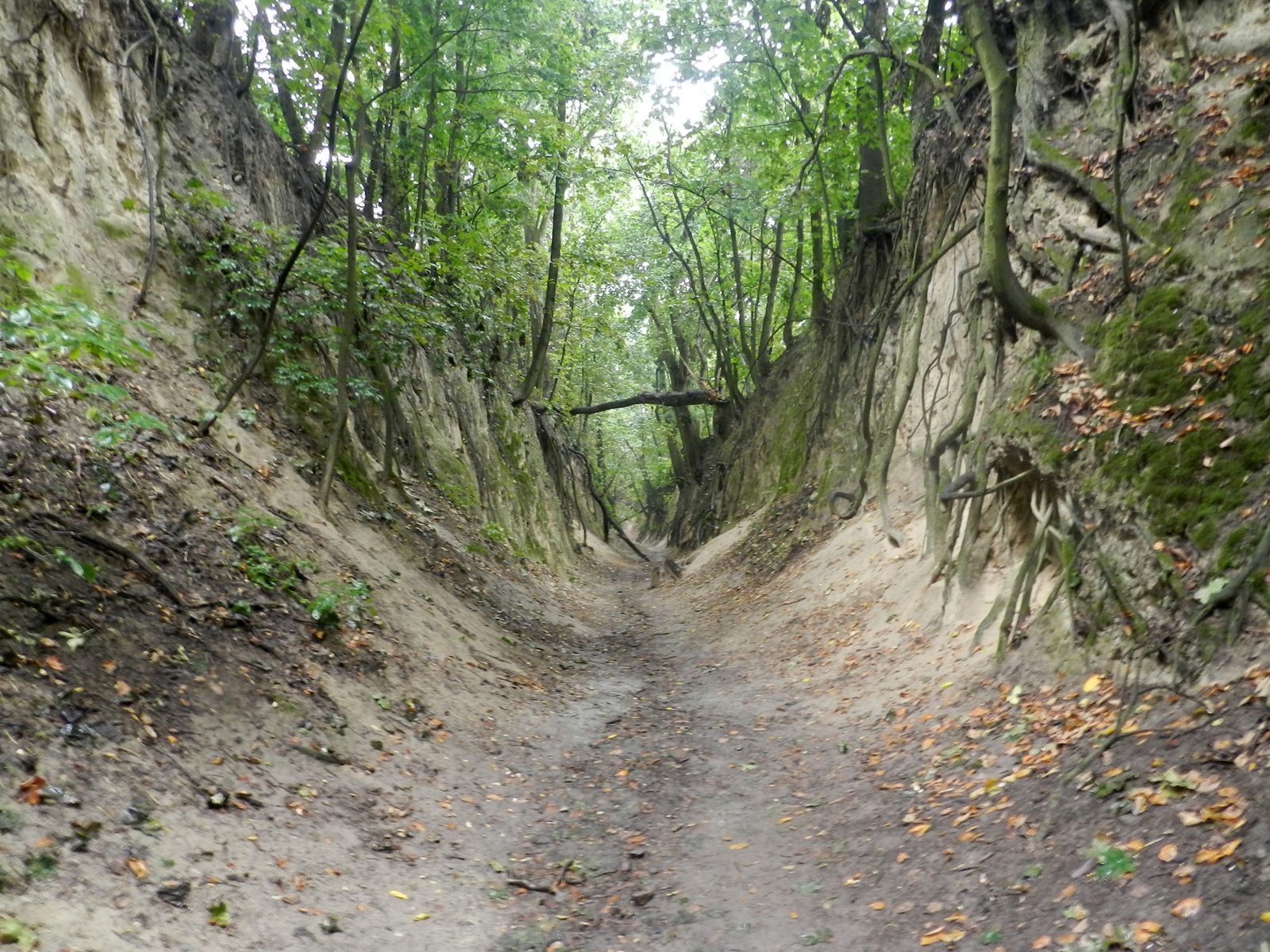
Queen Jadwiga's Ravine
A picturesque loess ravine right by the old town, just under half a kilometre long and up to about 10 metres deep, with exposed tree roots.
Sandomierz · 69 km away Read the guide →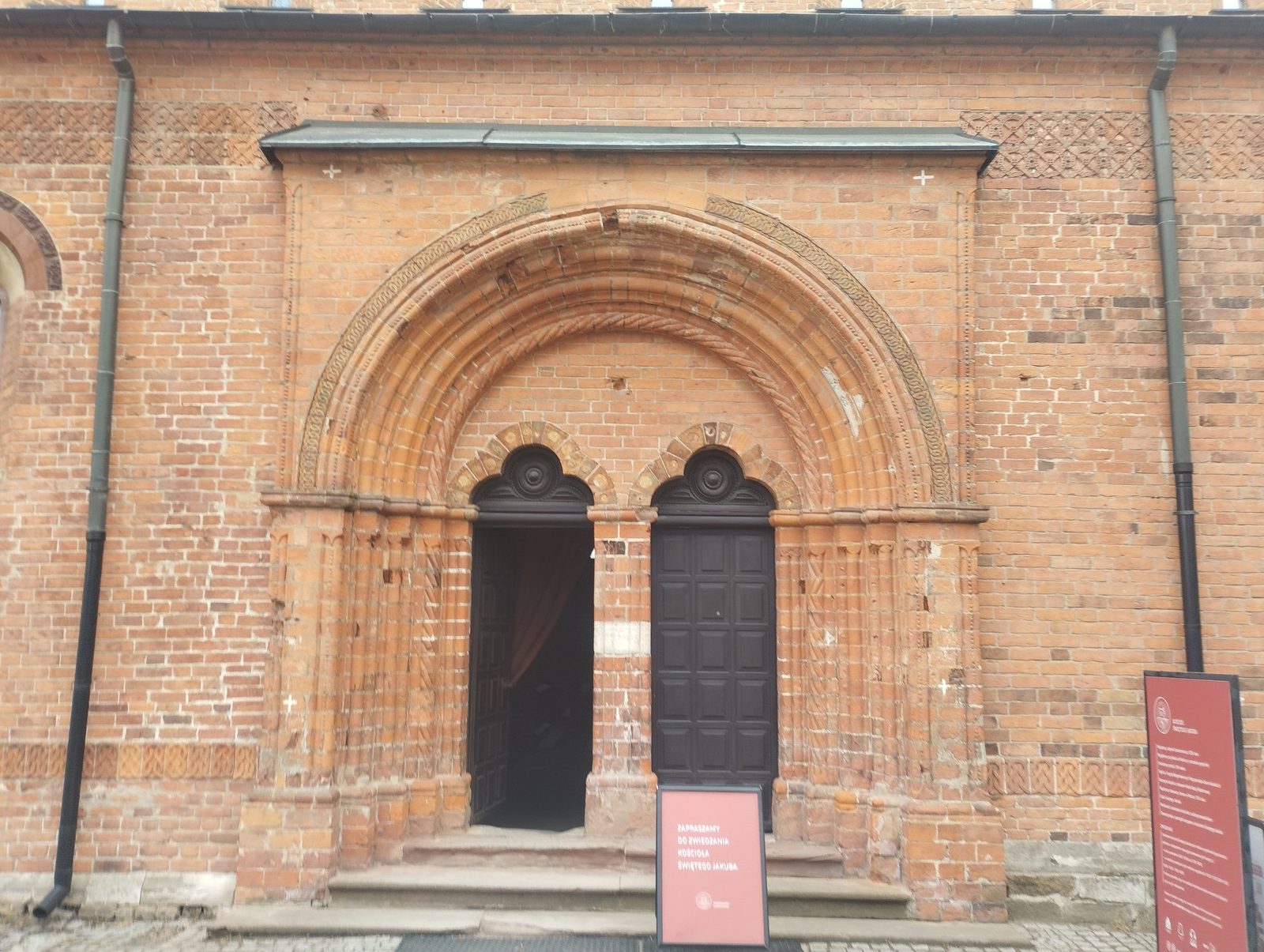
St James's Church
One of the oldest brick churches in Poland, raised by the Dominicans between 1226 and 1250 in the late Romanesque style.
Sandomierz · 69 km away Read the guide →
Ojców National Park
Poland's smallest national park: the Prądnik valley, Hercules' Club, Łokietek's Cave and Pieskowa Skała castle, 16 km north of Kraków.
Kraków · 90 km away Read the guide →
Kolbuszowa Open-Air Museum
Museum of Folk Culture — wooden cottages, windmills and a church of two ethnographic groups.
Rzeszów · 91 km away Read the guide →Do you run a property in Świętokrzyskie Voivodeship?
List your property — submitting is free. A standard listing with photos costs 100 zł a year, Premium — shown on the home page — 300 zł a year. Guests write to you directly, no commission.
List or submit a property →Świętokrzyskie Voivodeship in every season
Light still reaches the floor of the Łysogóry beech woods, and orchards flower in the ravines around Sandomierz.
Peak season in Sandomierz and Krzemionki; on hot days the cellars, caves and national park forest are the answer.
The best window for the Łysogóry — gold beeches and clear air above the block fields. Sandomierz gets quiet again.
The path up Łysica can ice over, but the Kielce palace, Wąchock abbey and the Krzemionki route are open year-round.
How to get there and what to know
- Getting there
- S7 expressway from Warsaw or Kraków to Kielce, then S74 east towards Opatów; trains to Kielce, Skarżysko-Kamienna and Sandomierz
- Where to base yourself
- Kielce for the whole region, Święta Katarzyna or Nowa Słupia for the Łysogóry, Sandomierz for the east, Busko-Zdrój for the Nida valley
- Best time to go
- May to June and September to October; July and August are busiest in Sandomierz and the spa towns
- National park
- Świętokrzyski National Park charges for trail access, and the block fields may only be viewed from the boardwalks
- Current hours and tickets
- regional portal and the websites of individual sites
- Character of the region
- Short distances, a lot of stone and archaeology, trails that are rocky rather than long — boots matter more than fitness
Where Świętokrzyskie Voivodeship is
Frequently asked questions — Świętokrzyskie Voivodeship
Where can you find a place to stay in Świętokrzyskie Voivodeship?
How much does a place to stay in Świętokrzyskie Voivodeship cost?
Do you run a property in Świętokrzyskie Voivodeship?
Add it to the guide and reach people looking for exactly this region — direct contact with the guest, a standard listing with photos costs 100 zł a year, submitting is free.





